
HIRING FOR SPEED VS HIRING FOR PERFORMANCE
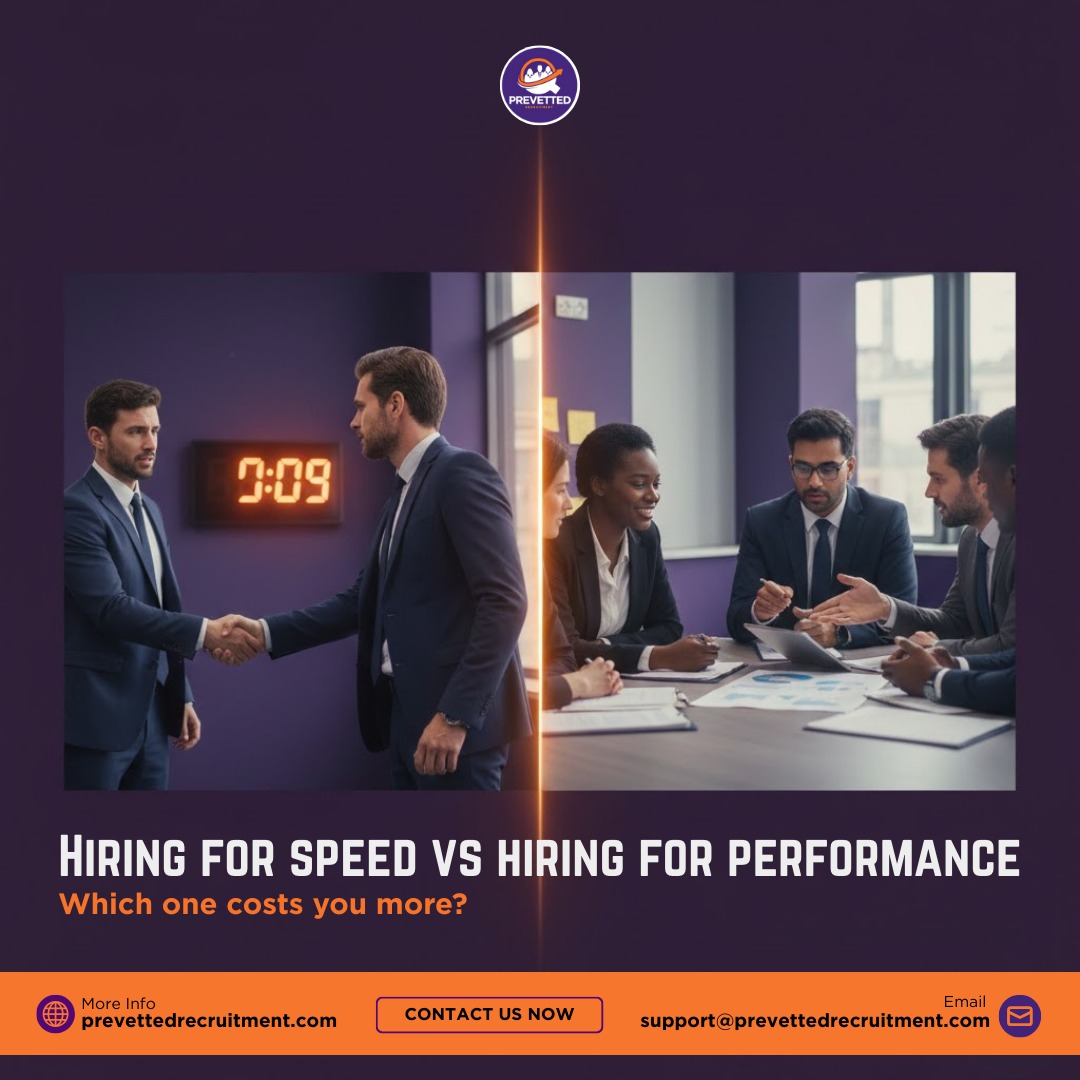
Hiring for speed is often celebrated as efficiency. A role opens unexpectedly, pressure builds internally, and leaders feel the weight of stalled productivity. The instinct is immediate and understandable. Fill the position quickly. Restore workflow. Reduce strain on the team. Move on.
But speed in hiring can be deceptive. While it may relieve short-term pressure, it often introduces long-term risk. The real question is not how quickly a position can be filled, but how effectively the individual hired will perform once they are in the role.
When organisations prioritise speed above all else, important steps in the recruitment process are often compressed or overlooked. Interviews may become surface-level conversations rather than structured evaluations. Reference checks are rushed. Skills assessments are reduced or skipped. Cultural alignment is assumed instead of explored. Decisions are made based on availability and first impressions rather than verified capability.
In the moment, this approach feels productive. The vacancy disappears from the organisational chart. The team feels a temporary sense of relief. Leadership sees progress. Yet over time, the true cost begins to surface. Underperformance becomes evident. Expectations are misaligned. Productivity dips. Team morale may suffer. Managers invest additional time correcting mistakes, re-explaining processes, or compensating for skill gaps.
Eventually, the organisation may find itself repeating the hiring process entirely. Recruitment costs rise. Training resources are spent twice. Team confidence in leadership decisions may erode. What seemed like a quick solution transforms into a cycle of disruption.
Hiring for performance requires a different mindset. It requires patience and discipline. It means defining success in the role before searching for candidates. It means evaluating not just experience, but outcomes. It means assessing how individuals think, adapt, collaborate, and execute under real working conditions. It means considering long-term contribution rather than immediate availability.
Performance-driven hiring recognises that recruitment is an investment, not a transaction. The objective is not simply to place someone in a seat but to strengthen the organisation’s capability. Strong hires generate measurable impact. They reduce management strain, improve team cohesion, and contribute to sustained growth. Their value compounds over time.
There is also a strategic dimension to consider. In competitive markets, organisations that consistently hire for performance build reputations as high-performing environments. Talented professionals are drawn to companies known for thoughtful recruitment and clear expectations. Retention improves because employees feel aligned with roles that match their skills and ambitions.
This does not mean speed is irrelevant. Businesses operate in dynamic environments, and delays can carry consequences. However, speed should be supported by structure, not replace it. A well-designed recruitment process can be both efficient and thorough. The difference lies in intention. Rushing is reactive. Structured efficiency is strategic.
The cost of hiring is rarely confined to recruitment fees or onboarding expenses. It extends to productivity, morale, leadership time, and opportunity cost. Every hiring decision shapes the organisation’s trajectory. Each new team member influences culture, output, and future potential.
At PREVETTED RECRUITMENT, the focus is on ensuring that hiring decisions are rooted in proven capability and alignment, not urgency alone. Thorough vetting, clear role definition, and performance-based assessment create a stronger foundation for long-term success. The goal is not simply to reduce time-to-hire, but to increase return on hire.
Ultimately, organisations must ask themselves what they value more: the appearance of quick progress or the reality of sustained performance. One delivers temporary relief. The other builds lasting results.
Hiring for speed may close a vacancy. Hiring for performance builds a future.