Interview Performance vs Real Capability
A reflective look at the gap between interview performance and real-world capability, exploring why traditional hiring methods often miss true talent.
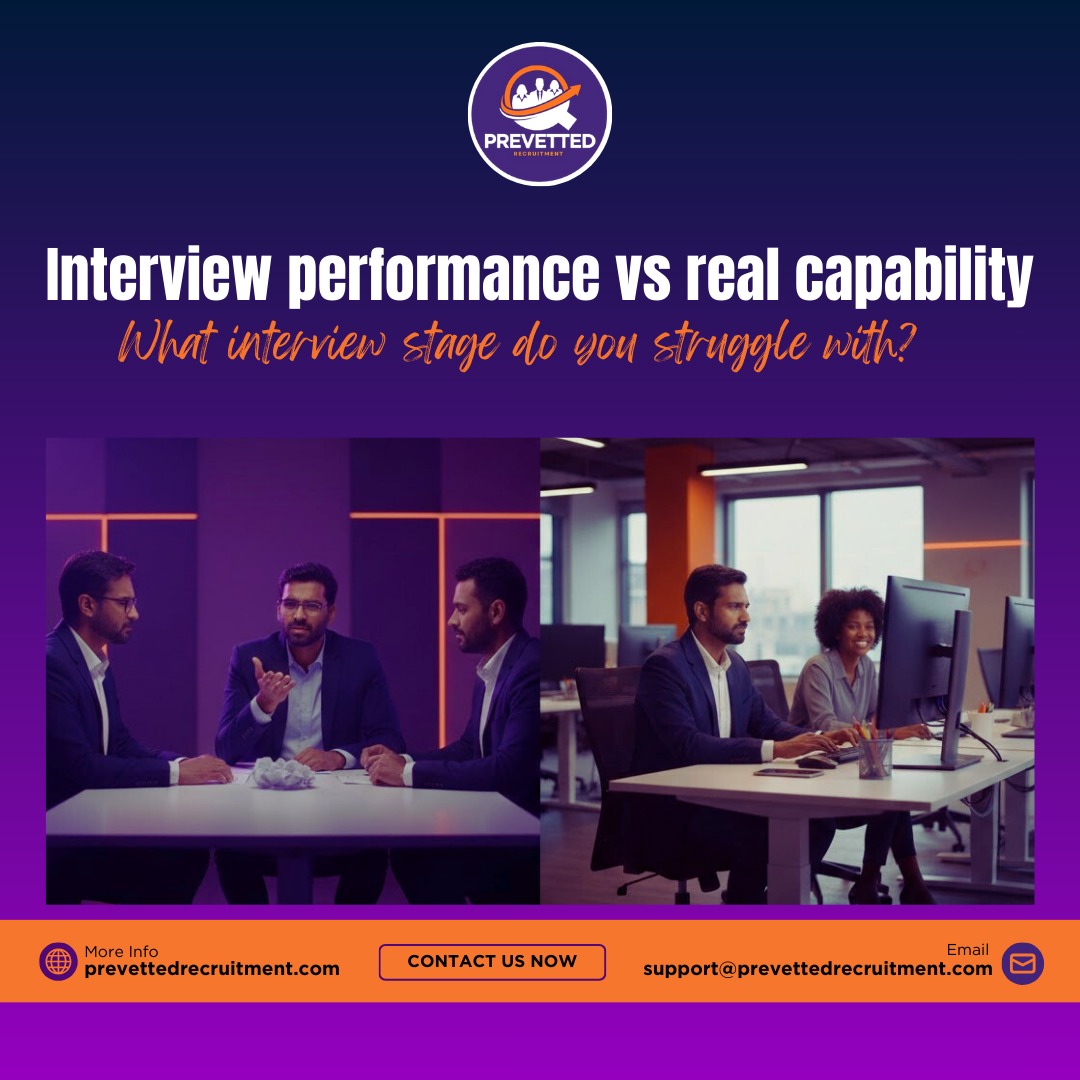
Interview performance and real capability are often treated as the same thing, yet anyone who has been involved in hiring knows how far apart they can be. An interview is a moment in time, a controlled environment where confidence, articulation, and preparation can heavily influence perception. Real capability, on the other hand, is revealed over weeks and months of problem-solving, collaboration, consistency, and adaptability in the workplace. The gap between these two realities is one of the biggest challenges modern recruitment faces.
Many organisations unknowingly hire for interview skill rather than job performance. Candidates who are confident speakers, quick thinkers under pressure, and well-rehearsed in common interview questions often stand out, even if those strengths do not translate directly into day-to-day execution. At the same time, highly capable professionals may struggle to communicate their value in a formal interview setting. Nerves, unfamiliar questioning styles, or an emphasis on hypothetical scenarios can mask genuine competence and experience. As a result, businesses risk overlooking exceptional talent while selecting candidates who appear strong on paper but underdeliver in practice.
This disconnect becomes especially visible at different stages of the interview process. Early screening calls may filter out candidates who are not naturally concise or assertive, even though they may excel in focused, independent work. Technical interviews can reward those who perform well under artificial time pressure while disadvantaging candidates who solve complex problems more methodically. Behavioural interviews often depend on storytelling ability rather than the substance of past performance, favouring those who know how to frame their experiences rather than those who consistently delivered results. By the final stage, decisions are sometimes influenced more by rapport and confidence than by evidence of long-term capability.
For employers, the cost of this mismatch is significant. A poor hire impacts productivity, team morale, and budgets, while the rehiring process consumes time and resources that could be better spent on growth. For candidates, repeated rejection despite strong real-world performance can lead to frustration, self-doubt, and disengagement from the job market. Both sides lose when interviews fail to capture what truly matters.
At PREVETTED RECRUITMENT, the focus is on bridging this gap by shifting attention away from surface-level performance and toward proven ability. Recruitment should not be about who gives the best answers on the day, but about who can consistently add value once they are in the role. This means looking deeper at how candidates have performed in real environments, how they approach challenges, how they collaborate with others, and how they adapt when conditions change. It also means recognising that strong talent does not always come packaged in polished interview delivery.
Modern hiring demands a more thoughtful approach, one that acknowledges the limitations of traditional interviews and compensates for them with meaningful vetting and assessment. When recruitment prioritises real capability over performance theatrics, businesses build stronger teams and candidates are matched to roles where they can genuinely succeed.
The question worth reflecting on is not whether interviews are necessary, but how much weight they should carry in defining a candidate’s potential. When organisations begin to ask what interview stage tends to distort true ability, they take the first step toward smarter, fairer, and more effective hiring.